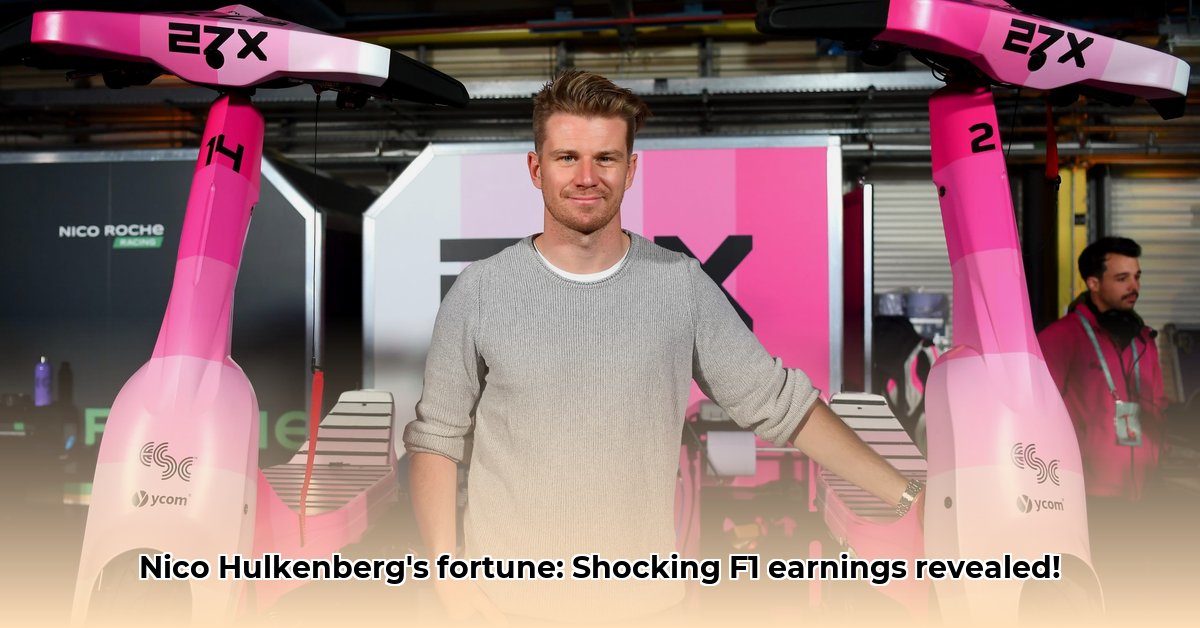
Nico Hulkenberg, the enduringly popular "Hulk," has carved a substantial fortune in Formula 1. Estimates place his net worth between $20 and $25 million. But how did this talented driver amass such wealth? His journey, from karting prodigy to seasoned F1 racer, reveals a compelling story of skill, strategic choices, and the financial dynamics of motorsport's pinnacle.
From Go-Karts to Grand Prix: Building a Foundation
Hulkenberg's path to F1 wasn't a straight line. He honed his skills in junior racing series, consistently demonstrating exceptional talent. Early victories and impressive performances attracted sponsors, providing crucial financial backing that fueled his ascent. His 2008 Formula 3 Euro Series championship win was a pivotal moment, propelling him into the F1 spotlight and significantly increasing his earning potential. These early successes weren't just about accolades; they were investments in his future financial security.
The F1 Rollercoaster: Salary and Performance
Hulkenberg's F1 career has been a blend of highs and lows. He's driven for Williams, Sauber, Force India (now Aston Martin), Renault, and currently Haas. While he hasn't consistently challenged for championships, his steady performance and occasional podium finishes have ensured a respectable salary. However, his earnings haven't reached the stratospheric levels of drivers like Lewis Hamilton or Max Verstappen. This is largely due to the fact that consistent championship contention is essential for securing the highest salaries in F1.
F1 driver salaries are heavily influenced by team performance and individual achievements. Racing for top teams like Red Bull or Mercedes guarantees significantly higher compensation. However, securing a seat at such a team requires consistently delivering winning results and consistently challenging for race victories.
Hulkenberg's salary likely fluctuated year to year, reflecting his team and individual performance. A top-tier team, combined with strong race results, would significantly impact his income.
Beyond the Track: Diversifying Income Streams
Hulkenberg's wealth isn't solely derived from race winnings. Like many successful athletes, he has secured lucrative endorsement deals with various brands. Promotional appearances and other events also contribute to his income. While precise figures remain confidential, his strong brand recognition and reputation enable him to secure substantial contracts. These diverse income streams are crucial in building a substantial net worth. How much exactly? It's hard to say for sure, but it contributes a significant portion to his overall wealth.
Comparing Hulkenberg's Earnings to F1's Elite
Let's contextualize Hulkenberg's earnings. Drivers like Max Verstappen regularly earn over $55 million annually. Lewis Hamilton's income also resides in an exceptionally high bracket, though exact figures are rarely publicized. While Hulkenberg's earnings are substantial, his position on the grid mirrors his financial standing. He's a highly respected driver, but the truly astronomical paychecks are reserved for those consistently contending for the championship. What can we learn from this comparison? That sustained top-tier performance is the key to maximizing earnings in F1.
Nico Hulkenberg's Current Status and Future Outlook
Currently, Nico Hulkenberg races full-time for the Haas F1 Team. His future earnings will depend heavily on his on-track performance and Haas' overall success. However, his extensive experience and continued presence in the sport position him well for ongoing income streams. His career reflects a common narrative in F1: financial success is inextricably linked to consistent performance and strategic career choices.
Conclusion: Unpacking the Hulk's Financial Success
Considering his entire F1 career, endorsements, and appearances, the $20-25 million net worth estimate is plausible. However, the inherent confidentiality surrounding athlete contracts makes precise calculations challenging. Hulkenberg's story underscores that even at Formula 1's highest levels, the full financial picture often remains partially obscured. It's a testament to the intricate interplay of talent, performance, and strategic decision-making that determines financial success in the world of Formula 1.